
Summer in Kansas brings a lot of things to look forward to. Longer evenings, time outdoors, and a lawn that should be in its prime. But it also brings a lineup of threats that can turn a healthy yard into a frustrating mess in a matter of weeks.
We’re talking about lawn fungus, white grubs, bagworms, and armyworms. Four different problems, four different targets, but one thing in common: by the time most homeowners notice the damage, the window to treat effectively is either closing or already gone.
Here’s what to watch for, when it matters, and why acting early is the whole game.
Lawn Fungus: Brown Patch and Dollar Spot
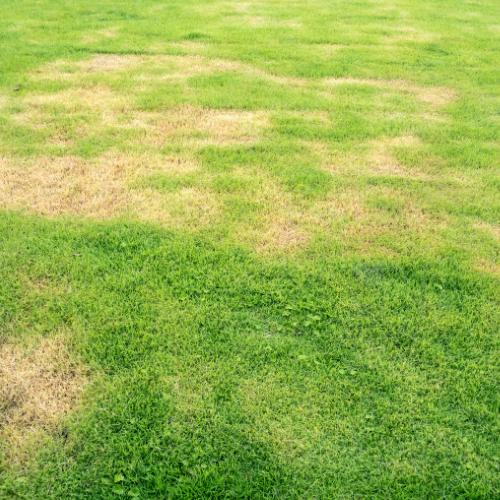
If you’ve ever walked out to your lawn in mid-July and found circles of dead-looking grass that weren’t there two days ago, there’s a good chance you’ve met brown patch.
Brown patch is the most common fungal disease in Kansas lawns, especially in tall fescue. It shows up as circular brown or tan patches, anywhere from a few inches to several feet wide, often with a darker ring around the outer edge. That ring is sometimes called a “smoke ring,” and it’s easiest to spot in the early morning when dew is still on the grass.
The conditions that trigger it are simple: nighttime temperatures above 65°F, high humidity, and moisture sitting on the leaf blades for extended periods. In Kansas, that combination typically kicks in during late June and stays through August.
Dollar spot is the other fungal threat to watch for. It creates small, silver-dollar-sized patches of tan, sunken grass, usually in clusters. Dollar spot tends to show up when nitrogen levels are low and humidity is high, especially during stretches of cool nights and warm, dewy mornings.
Why Fungus Is So Tricky to Catch
The conditions that cause it (heat and humidity) are the same conditions that make homeowners want to water more. But overwatering, especially in the evening, is exactly what these diseases need to spread. By the time you see the damage, the fungus has been active for days or even weeks beneath the surface.
A properly timed lawn care program that includes preventive fungicide treatments works. Reactive treatments applied after the damage shows are far less reliable. The goal is to get ahead of it, not chase it.
White Grubs: The Damage You Can’t See Until It’s Too Late
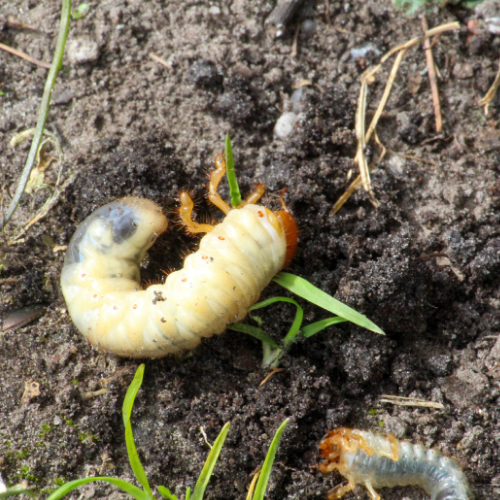
White grubs are the larval stage of masked chafer beetles, the most common grub pest in Kansas. The adults emerge from the soil in mid-June, mate, and the females burrow back into the ground to lay eggs. Those eggs hatch in mid-to-late summer, and the tiny grubs immediately start feeding on grass roots.
The problem is that all of this happens underground. You won’t see grub damage until late summer or early fall, when the turf starts pulling up like loose carpet. By then, the root system is already destroyed. And if you notice skunks, raccoons, or birds tearing up your yard, they’re after the grubs, which means the infestation is well established.
When to Treat for Grubs
The treatment window for grubs is preventive, not reactive. A systemic preventive application in June to early July, before the eggs hatch, is the most effective way to protect your lawn. The product gets absorbed into the soil and waits for newly hatched grubs to start feeding. Once they do, they’re eliminated before any damage shows.
Curative treatments exist for late summer, but they’re far less consistent. If you’ve had grub problems before, or if your neighbors have, getting on a treatment schedule right now is the smart move.
Bagworms: Stripping Your Evergreens While You’re Not Looking

arian.suresh from Chennai, India, CC BY 2.0 https://creativecommons.org/licenses/by/2.0, via Wikimedia Commons
Bagworms are a well-known and widespread pest in Kansas, and June is when they start doing real damage. They feed on junipers, arborvitae, cedars, and other evergreens, building small silk bags around themselves that are camouflaged with bits of foliage.
Eggs hatch from late May through early June. The newly hatched larvae are tiny, about the size of a pencil lead, and they start feeding immediately. By mid-summer, the bags can grow to one or two inches long. That’s usually when homeowners notice them, and by that point, it’s often too late for treatment to be effective.
Why Bagworm Damage Is Permanent on Evergreens
Evergreens don’t have dormant buds to regrow lost foliage. Once bagworms strip a juniper or arborvitae, the needles don’t come back. A severe infestation can kill the plant entirely.
A single thorough insecticide treatment in late June to early July, when the larvae are still small and actively feeding, is the most effective approach. For trees with heavy infestations in previous years, a second spray a few weeks later may be needed. But the key is catching them early, before the bags get large enough to protect the larvae from treatment.
What Happens If You Wait
By mid-August, bagworms seal themselves inside their bags and stop feeding. At that point, chemical treatment is a waste of time and money. Each female can lay up to 500 eggs inside her bag, and those eggs will overwinter and hatch the following spring. One bad year of bagworms can set up years of recurring problems if left unchecked.
If you have evergreens on your property, now is the time to inspect them. Not August.
Armyworms: The Overnight Lawn Wrecker

Armyworms are a different kind of threat than grubs. While grubs feed underground on roots, armyworms feed above ground, chewing through grass blades at an alarming rate. They’re called “armyworms” because they move in large groups across a lawn, and a heavy infestation can strip a healthy yard almost overnight.
In Kansas, armyworms have become an increasingly common problem during summer. They don’t overwinter here. Instead, they migrate north from the southern U.S. each year, which means outbreaks are unpredictable and can vary widely from one season to the next. When they show up, they show up fast.
How to Spot Armyworms
Look for sudden, widespread browning or thinning that doesn’t follow the typical pattern of drought stress or fungus. The damage often appears patchy and random. If you get down at lawn level and look carefully, you can spot the caterpillars (green or gray with brown and yellow stripes, up to two inches long) hiding under the grass canopy during the day and feeding actively in the mornings, evenings, and on cloudy days. They have a particular taste for tall fescue, which is the dominant lawn grass across our area.
How We Treat Armyworms
Armyworms are treatable with insecticide when caught early. Our CFT (Chigger, Flea & Tick) treatment covers armyworms as well, so customers on the CFT schedule already have a layer of protection in place. If you’re not on the schedule and notice sudden lawn damage that doesn’t match the usual suspects, contact us right away. The faster we get to it, the better the outcome.
Unlike grubs and bagworms, there’s no reliable preventive window for armyworms because their arrival depends on migration patterns and weather. The best defense is regular lawn monitoring and fast response when they appear.
Why Timing Is Everything
Each of these threats has a narrow window where treatment works, followed by a long stretch where it doesn’t:
- Lawn fungus needs to be treated preventively before the hot, humid conditions trigger it
- Grubs need a preventive application in June or July, before eggs hatch and feeding starts underground
- Bagworms need treatment in late June to early July, while larvae are small and exposed
- Armyworms need fast action as soon as they’re spotted. Waiting even a few days can mean significant damage
The homeowners who avoid the worst summer damage aren’t the ones with the best lawns to start with. They’re the ones on a treatment schedule that addresses these threats before they become visible.
That’s exactly how we approach it at Schendel. Our seasonal lawn care treatment programs are built around these windows. We’re already watching for the signs, already timing the applications, and already on your property before the damage shows up.
Get on the Schedule Before the Window Closes
If you’re not currently on a treatment schedule for grub control, bagworm spraying, or lawn care, now is the time to get on one. Not next month. Not when you see the first brown patch. Right now, while the treatment windows are still open.
We serve properties across Topeka,Lawrence, and surrounding communities.
Ready to get on the schedule? Get a free estimate or give us a call.
Topeka: (785) 286-0015
Lawrence: (785) 330-5326
