
May in Kansas is the last comfortable window you get before summer takes over. Once June arrives, temperatures climb, humidity builds, and your lawn shifts from active growth mode into survival mode.
What you do in May directly affects how your yard handles the next four months. A lawn that goes into summer strong, properly mowed, well-fed, and hydrated holds up. A lawn that goes into summer stressed, thin, and neglected struggles to recover until fall.
This checklist covers the essentials. Not every item requires a professional. Some of this is a Saturday morning and a pair of work gloves. But knowing what to prioritize and what order to tackle it in makes the difference between a yard that thrives and one that limps through August.
Clean Up Winter Debris
If you haven’t done a thorough spring cleanup yet, May is your last chance before it starts to cause real problems.
Walk the entire property and clear out fallen branches, matted leaves, and anything else that accumulated over winter. Pay special attention to areas under trees, along fence lines, and in planting beds where debris tends to collect and compact.
Matted leaves left on the lawn smother new growth and create damp conditions where fungus develops. Branches left in beds prevent mulch from lying flat and give pests places to hide. A clean slate in May sets you up for a cleaner yard all summer.
Adjust Your Mowing Height
This is one of the simplest and most impactful things you can do for your lawn, and it’s where most homeowners get it wrong.
According to K-State Research and Extension, the recommended mowing height for tall fescue and Kentucky bluegrass in Kansas is between 3-4 inches. K-State horticulture experts recommend mowing at the high end of the range for each species to improve drought resistance by encouraging deeper roots.
The one-third rule matters too. Never remove more than one-third of the grass blade in a single mowing. Cutting too short stresses the plant, exposes soil to sunlight, which helps weed seeds germinate, and weakens the root system right before it needs to be at its strongest for summer.
If your lawn got ahead of you and is taller than usual, bring it down gradually over two or three mowings rather than scalping it in one pass.
Sharpen your mower blades if you haven’t already. Dull blades tear grass instead of cutting it, leaving ragged tips that turn brown and become entry points for disease.
Check for Bare Spots
Walk your lawn and take note of any thin or bare areas. These could be from winter damage, heavy foot traffic, pet activity, or vole tunneling under snow cover.
Here’s the timing challenge: spring is not the ideal time to seed cool-season grass in Kansas. Pre-emergent herbicide, which you need to prevent crabgrass, also prevents grass seed from germinating. You can’t do both in the same area at the same time.
If the bare spots are small, your best bet is to mark them now and plan to overseed in September when conditions are optimal. Fall brings cooler temperatures, consistent rainfall, and less weed competition, giving new grass the best chance to establish strong roots before winter.
If the bare spots are large or highly visible, sod installation is an option that works in spring. Sod is already established grass, so it doesn’t conflict with pre-emergent applications and gives you an instant result.
Mulch Your Beds
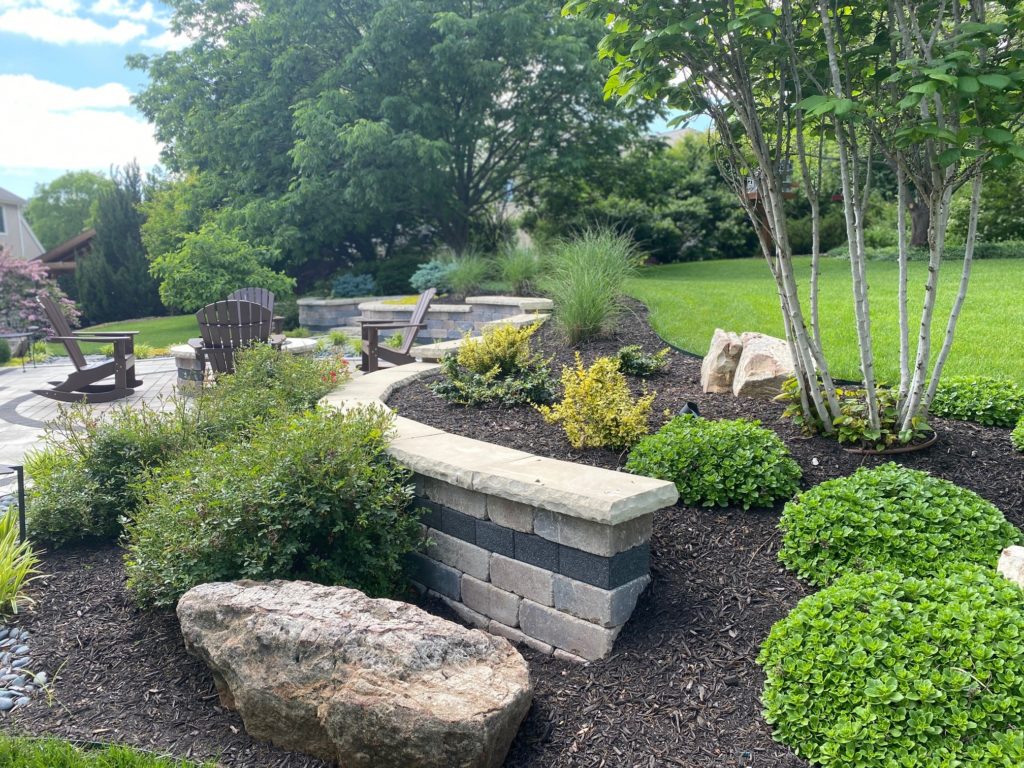
Fresh mulch does more than make your planting beds look good. It suppresses weeds, retains soil moisture, regulates soil temperature, and protects plant roots from the temperature swings Kansas throws at them through summer.
May is the ideal time to mulch. The soil has warmed up enough for plants to be actively growing, and you’re getting the moisture retention benefit in place before the heat arrives.
Apply 2 to 3 inches of mulch in all planting beds, tree rings, and landscape borders. Pull mulch a few inches away from the base of tree trunks and shrub stems to prevent moisture buildup that can cause rot.
If your existing mulch from last year still looks decent, a thin refresh layer on top is often enough. If it’s broken down, faded, or thin, a full new application is worth the investment.
Make Sure Your Irrigation Is Dialed In
If your irrigation system hasn’t been turned on and inspected yet, May is the deadline. Waiting until June means your lawn is already under heat stress before you’ve even confirmed the system works.
Run every zone manually and walk the yard while it runs. Check for heads that won’t pop up, uneven spray patterns, soggy spots that suggest underground leaks, and dry areas that aren’t getting coverage. Make sure your backflow preventer has been tested and your controller programming is set for spring watering needs, not last summer’s schedule.
Kansas lawns generally need about one inch of water per week, including rainfall. In May, natural precipitation often covers most of that. But as temperatures climb into June, your irrigation system becomes essential. Getting it inspected and adjusted now means you’re ready when the switch flips.
Edge Your Beds
This is the task that makes the single biggest visual impact with the least amount of effort. Crisp, clean bed edges make your entire landscape look maintained and intentional.
Use a half-moon edger or flat spade to re-cut the edges of all planting beds, tree rings, and borders. Over the winter, edges blur as grass creeps into beds and soil shifts. A clean edge in May holds its shape for most of the summer with minimal touch-up.
Spot-Check for Weeds
If you’re on a professional lawn care program, your pre-emergent should already be down. But broadleaf weeds like dandelions, clover, and chickweed will still pop up in spring regardless.
Spot-treating individual weeds is more effective and less risky than blanket-spraying the entire lawn in spring. K-State Extension recommends caution with spring herbicide applications because broadleaf products can vaporize on warm days and drift onto desirable landscape plants, causing leaf curl and deformity.
If weeds are widespread, a professional application timed to current conditions is more effective than a DIY approach based on general package instructions.
Plan Ahead for June
May is also the time to think about what’s coming next. June brings peak mosquito pressure, wasp and yellowjacket nest building, increased ant activity, and the start of real heat stress on your lawn.
If you’re not currently on a lawn care or landscape maintenance program, getting one in place now means you’re covered before summer problems start rather than reacting to them after the damage is done.
Ready to Check It All Off the List?
Some of this checklist is a weekend project. Cleanup, edging, and mowing adjustments are things most homeowners can handle themselves. For mulching, sod, irrigation, and weed control, professional help saves time and delivers better results.
Schendel Lawn and Landscape offers a full range of lawn care, landscape maintenance, and irrigation services across the Topeka and Lawrence area. Whether you need one service or a full seasonal plan, we’ll build it around your yard and your goals.
Call us today at 785-286-0015 (Topeka), 785-330-5326 (Lawrence), or request your free estimate online.
