
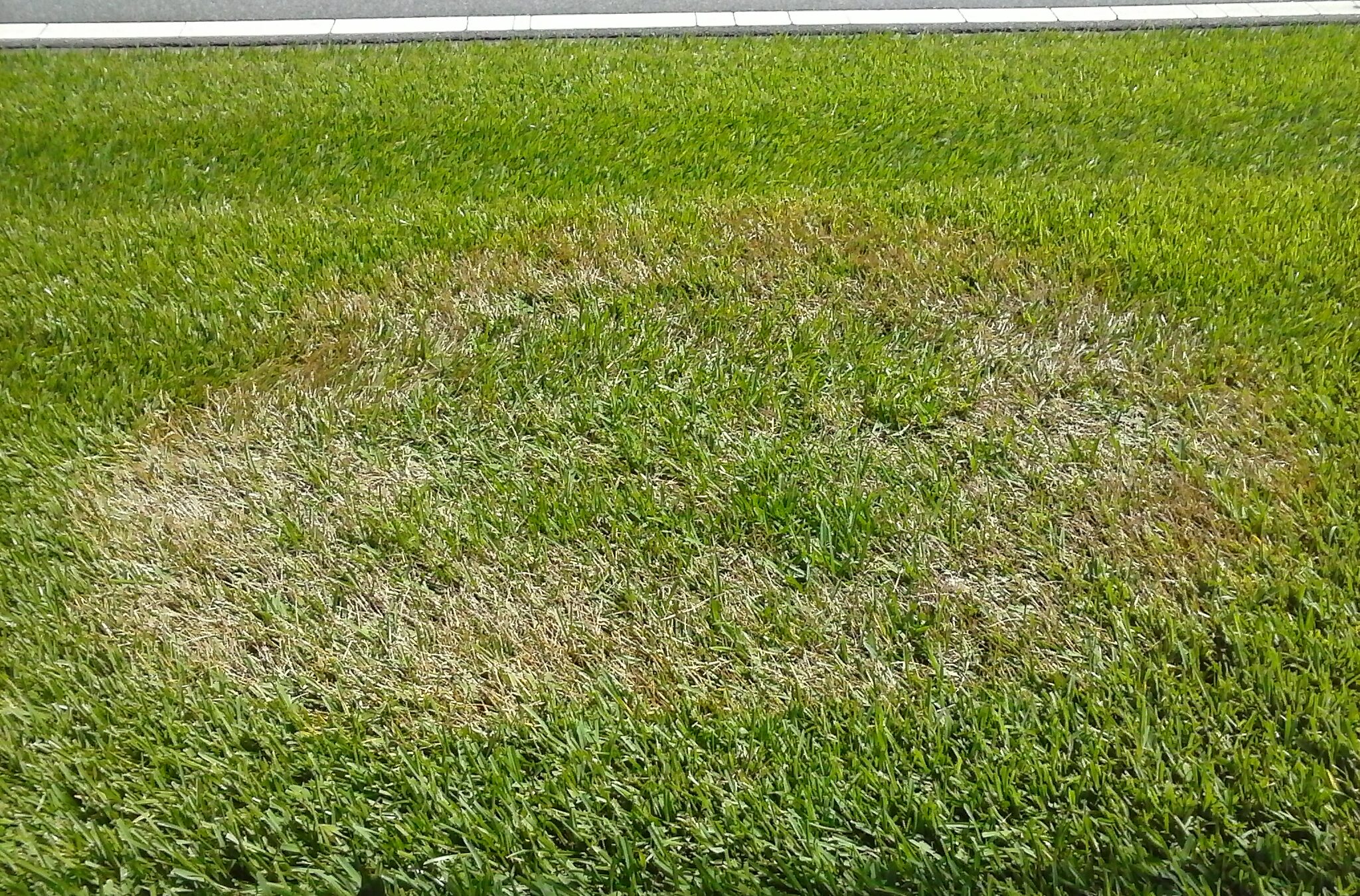
If you’ve noticed circular patches of brown or tan grass showing up in your lawn over the past few weeks, you’re not imagining things. And it’s probably not drought if you’ve been watering regularly.
July and August are peak season for brown patch in Kansas, and this year’s combination of heavy rain followed by heat and humidity has created near-perfect conditions for it. We’re seeing it across properties in both our Topeka and Lawrence service areas, and the calls are picking up.
Here’s what brown patch actually is, how to tell if that’s what you’re dealing with, what makes it worse, and what to do about it before the damage spreads further.
What Is Brown Patch?
Brown patch is a fungal disease caused by Rhizoctonia solani, and it’s the most common lawn disease in Kansas. It affects cool-season grasses, especially tall fescue and Kentucky bluegrass, which are the dominant lawn types across our area.
According to Kansas State University’s horticulture program, brown patch is most active during warm, humid weather when nighttime temperatures stay above 65°F, and grass blades remain wet for extended periods. In Kansas, those conditions typically set in during late June and hold through August.
The fungus is a leaf pathogen, meaning it attacks the blades of grass rather than the root system. In most cases, the turf can recover on its own once cooler weather returns, usually within two to three weeks. But in severe outbreaks, the fungus can spread down into the crown of the plant and cause permanent damage that requires fall seeding to repair.
How to Identify Brown Patch in Your Lawn
Brown patch can look a lot like drought stress at first glance. Both produce brown or tan patches in the lawn, and both tend to show up during the hottest stretch of summer. But there are a few key differences that help you tell them apart.
What Brown Patch Looks Like
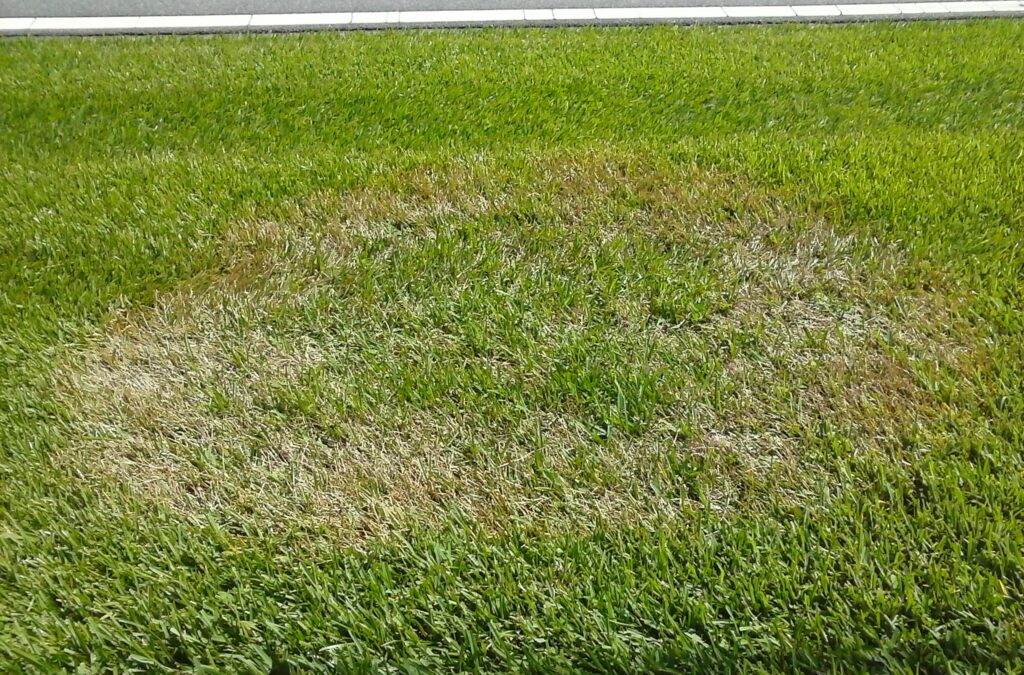
- Circular or irregular patches of tan or brown grass, ranging from a few inches to several feet across
- A darker ring around the outer edge of the patch, sometimes called a “smoke ring,” that’s easiest to spot in the early morning when dew is on the grass
- Individual grass blades with tan lesions and a dark brown border (look closely at the blades along the edge of a damaged area)
- Patches that seem to appear or expand overnight, especially after warm, humid evenings
How It Differs from Drought
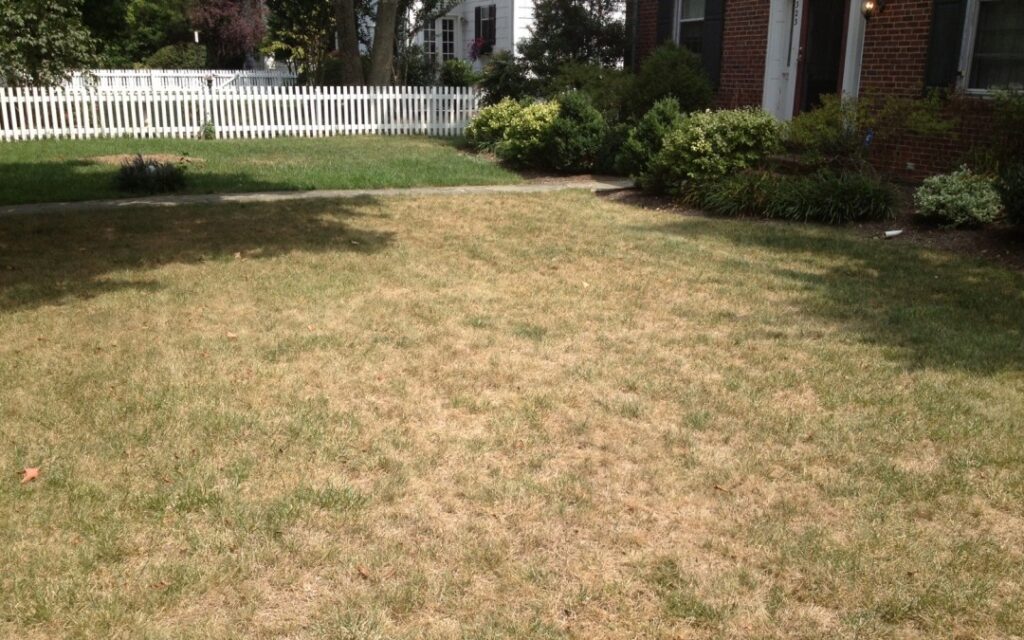
Drought-stressed grass looks dry, straw-colored, and crispy. Brown patch grass looks soft, sometimes wet or slimy at the base, and the blades show distinct lesions rather than uniform drying. If you pull gently on the grass in the affected area and it slides out easily at the base, that’s a sign the fungus has been active.
If your irrigation system is running and the lawn is getting adequate water but still showing these symptoms, brown patch is the more likely culprit.
What Makes Brown Patch Worse
The frustrating part about brown patch is that some of the things homeowners do to help their lawn during summer actually make the fungus worse.
Evening Watering
This is the single biggest contributor to brown patch that homeowners can control. Watering in the evening means moisture sits on the grass blades all night, which is exactly what the fungus needs to spread. Morning watering (before 8 AM) gives the grass time to dry during the day, which significantly reduces infection risk.
Heavy Summer Nitrogen
Applying high-nitrogen fertilizer in summer pushes lush top growth, which creates a dense canopy that traps moisture and gives the fungus more tissue to attack. This is one of the reasons a professionally managed lawn care program uses slow-release formulations during summer instead of the fast-release products commonly found at the hardware store. Our Thrive Lawn Care program is designed with this exact balance in mind.
Mowing Too Short or with Dull Blades
Cutting the lawn below 3.5 inches removes the leaf surface your turf needs to recover from stress. Mowing with dull blades shreds the grass tips, creating open wounds that become entry points for the fungus. We covered both of these in detail in our post on summer mowing mistakes.
Thick Thatch
A thatch layer thicker than half an inch traps moisture against the soil surface and creates the humid microenvironment brown patch thrives in. If your lawn hasn’t been aerated recently, thatch buildup could be making the problem worse.
What About Dollar Spot?
Dollar spot is the other common fungal disease we see across Kansas lawns in summer. It creates small, silver-dollar-sized patches of tan or straw-colored grass, usually in clusters. The individual lesions on the blades are distinct, with tan centers and reddish-brown borders.
Dollar spot tends to show up when nitrogen levels are low, and the lawn is under stress from drought or heat. Unlike brown patch, which is often triggered by too much nitrogen and moisture, dollar spot is more common in lawns that aren’t getting enough nutrition.
A properly timed Thrive Lawn Care program helps prevent both by keeping nitrogen levels balanced throughout the season rather than too high in summer (which feeds brown patch) or too low (which invites dollar spot).
Can Brown Patch Be Treated?
Yes, but timing matters.
Preventive Fungicide
Preventive fungicide applications are the most reliable approach. These are applied before or at the very start of the disease window, typically in late June through July, and they create a protective barrier that limits the fungus’s ability to infect the turf. Our team includes fungicide applications as part of the seasonal treatment schedule for properties that need it.
Reactive Treatment
Curative fungicide applied after symptoms appear can slow the spread, but it won’t reverse damage that’s already done. The grass blades that have been killed by the fungus need time to regrow, and in severe cases, they won’t come back without reseeding.
Cultural Practices
Even without fungicide, adjusting your watering schedule and mowing habits can make a significant difference. Switch to morning watering, raise your mowing height, sharpen your blades, and avoid fertilizing with high-nitrogen products during the active disease window. These steps won’t cure an active outbreak, but they’ll slow the spread and reduce the severity.
What If the Damage Is Already Done?
If your lawn has brown patch areas that haven’t recovered after two to three weeks of cooler conditions, the fungus likely reached the crown of the plant. Those spots won’t fill back in on their own.
The fix is fall seeding.
Fall is the best time to reseed in Kansas. Cooler temperatures, more consistent moisture, and less competition from weeds give new seed the best chance to establish strong roots before winter. We offer two options for fall seeding this year depending on your lawn’s needs and budget:
- Seeding with aeration: combines overseeding with core aeration to break up compacted soil, improve seed-to-soil contact, and promote deeper root growth. This is the most effective approach for lawns with compaction or heavy thatch.
- Seeding without aeration: focuses on overseeding alone for lawns that primarily need to fill in damaged areas without the added soil work.
Both options use quality fescue blends selected for our climate. If you’re seeing brown patch damage now, getting on the fall seeding schedule early is the smartest move. Spots fill up fast once September approaches.
Don’t Wait for the Damage to Get Worse
Brown patch spreads quickly when conditions are right, and July and August in Kansas are exactly those conditions. The earlier you catch it and adjust your practices or get on a treatment schedule, the less damage your lawn takes and the less work it needs to recover this fall.
If you’re seeing brown circles, tan patches, or symptoms that don’t look like normal drought stress, contact us or give us a call. We can evaluate what’s happening and recommend the right next step, whether that’s a fungicide treatment, a change in your care routine, or getting on the schedule for fall seeding.
We serve properties across Topeka, Lawrence, and surrounding communities.
Ready to get ahead of it? Get a free estimate or give us a call.
Topeka: (785) 286-0015
Lawrence: (785) 330-5326
