
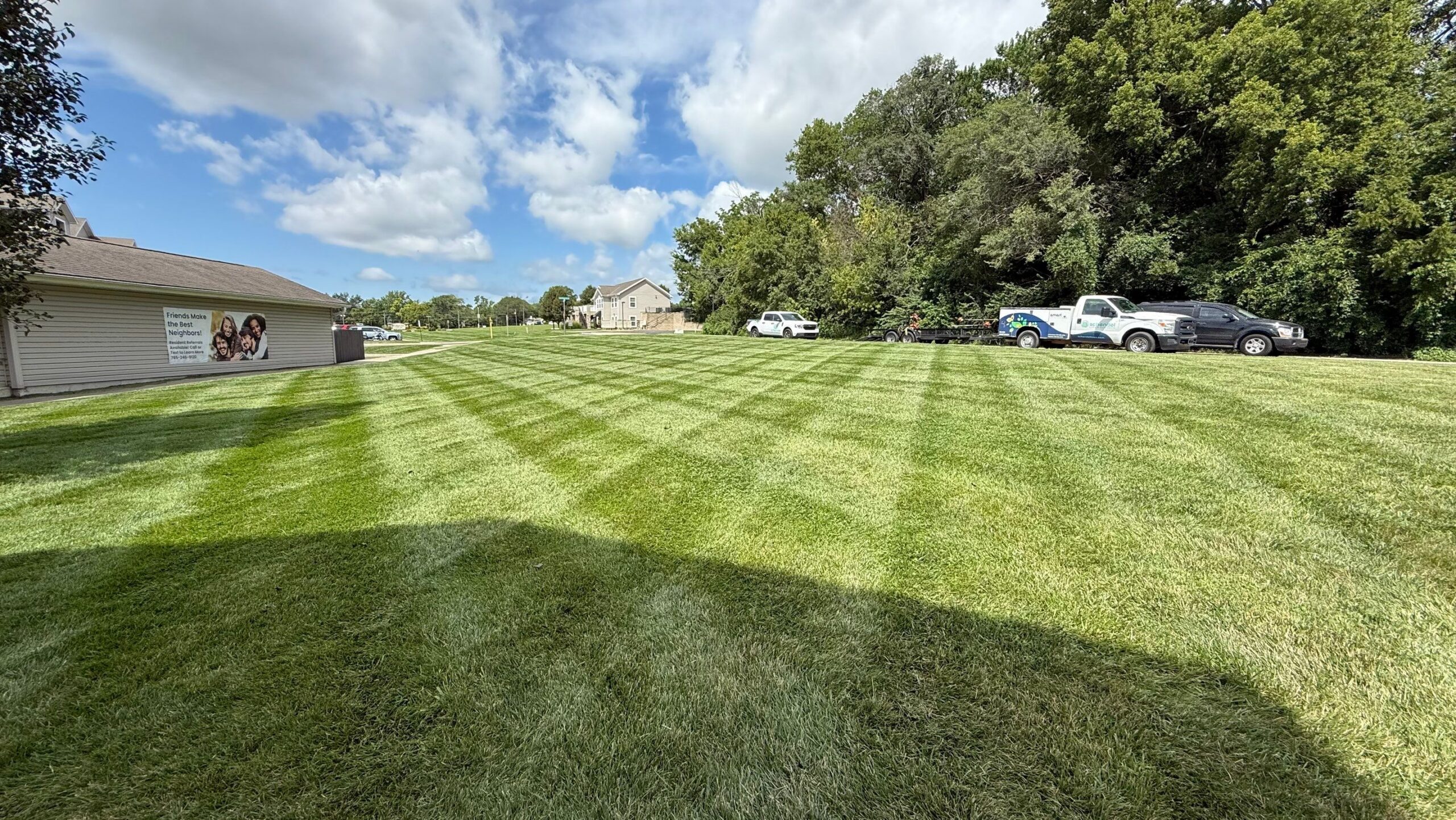
We see it happen every summer across our Topeka and Lawrence service areas. A lawn that looked great in May starts thinning out by July, and by August the homeowner is calling us wondering what went wrong.
The way you mow your lawn in Kansas during summer has a bigger impact on turf health than most homeowners realize. And the habits that work fine in spring can actively damage your lawn once the heat and humidity move in. Our team sees these same mistakes on properties all season long, so here’s what to watch for and how to fix it before the stress shows.
Cutting Too Short
This is the most common and most damaging mowing mistake we see. Homeowners set the deck low because they want to mow less often, but what they’re actually doing is scalping the lawn and setting it up to struggle all summer.
What Scalping Does to Kansas Lawns
When you cut grass too short, you’re removing the leaf surface the plant depends on to produce energy. Less leaf means less food production, which means weaker roots, thinner turf, and a lawn that dries out fast between waterings.
For tall fescue and Kentucky bluegrass, the two most common grass types across the Topeka and Lawrence area, the recommended summer mowing height is 3.5 to 4 inches.
Taller grass shades the soil, which helps it retain moisture and keeps soil temperatures lower. It also shades out weed seeds that need sunlight to germinate, including crabgrass. A lawn mowed at 3.5 to 4 inches is doing some of its own weed prevention simply by being tall enough to block the light.
The Fix
Raise the deck. If you’ve been mowing at 2.5 or 3 inches, bump it up to 3.5 or higher for the summer months. Your lawn will look fuller, stay greener between waterings, and handle heat far better.
Mowing on a Fixed Schedule Without Adjusting Your Approach
Most homeowners mow every Saturday regardless of how fast the grass is actually growing. Mowing on a consistent schedule isn’t the problem. The problem is mowing the same way every time without adjusting for what the lawn is doing that week.
Why This Creates Problems
In spring, Kansas lawns grow fast enough that a weekly mow is removing a significant amount of blade. In the heat of July, that same lawn slows down considerably, but it still needs to be cut at least every two weeks to stay healthy and keep a clean appearance. The difference is how much is coming off each time.
The rule that matters is the one-third rule: never remove more than one-third of the grass blade in a single mowing. During fast growth, that might mean raising the deck slightly or mowing a day or two earlier in the week so you’re not taking off too much at once. During slow growth, it means recognizing that a light pass is all the lawn needs rather than cutting aggressively.
When our crews mow a property on a weekly schedule, they’re adjusting for these conditions every visit. The height, the approach, and the amount being removed all change based on what the lawn is doing that week. That’s the difference between a fixed schedule with no thought behind it and a consistent schedule managed by professionals who know what to look for.
What Happens When You Break the One-Third Rule
Removing more than a third of the blade shocks the plant. It forces the grass to redirect energy from root growth to regrowing leaf tissue, which weakens the root system right when it needs to be strongest heading into Kansas summer heat. Over time, this creates thin, shallow-rooted turf that’s more vulnerable to drought, disease, and weed invasion.
Mowing with Dull Blades
This one is easy to overlook because the lawn still gets shorter whether the blade is sharp or not. But the quality of the cut matters a lot more than people think, especially in summer.
How a Dull Blade Damages Turf
A sharp mower blade cuts grass cleanly. A dull blade tears and shreds the tip, leaving ragged, frayed edges that turn brown, lose moisture faster, and become entry points for fungal diseases like brown patch and dollar spot.
During summer in Kansas, when humidity and heat already create ideal conditions for lawn fungus, mowing with a dull blade is adding fuel to the fire. Our mowing teams sharpen blades on a regular rotation for exactly this reason. It’s not something most homeowners think about, but it’s one of those small details that separates a healthy lawn from a struggling one.
The Fix
Sharpen your mower blade at least two to three times per season, or more if you’re mowing frequently. A quick test: if the tips of your grass look white or frayed a day or two after mowing, the blade needs sharpening.
Bagging Clippings When You Should Mulch
A lot of homeowners bag their clippings because they think leaving them on the lawn creates thatch or looks messy. In most cases, that’s not accurate.
Why Clippings Belong on the Lawn
Grass clippings are mostly water and nitrogen. When you leave them on the lawn, they break down quickly and return nutrients directly to the soil. It’s free fertilizer. When paired with a professional fertilization program like Thrive Lawn Care, mulched clippings actually enhance the results by keeping nitrogen cycling through the soil between visits.
Clippings do not contribute to thatch buildup. Thatch comes from stems and roots, not leaf tissue. The only time bagging makes sense is when the grass has gotten too tall between mowings and the clippings are clumping in thick piles that smother the turf underneath. If you’re following the one-third rule, that shouldn’t be an issue.
The Fix
Switch to mulching mode if your mower has a mulch plug. If not, remove the bag and let the clippings fall. As long as they’re short enough to settle between the grass blades, they’ll disappear within a day or two.
Mowing Wet Grass
It’s tempting to mow right after a rain or early in the morning while dew is still heavy. The grass is tall, the day is going to be hot, and you want to get it done. With the amount of rain Kansas has gotten this spring, this one is especially relevant right now.
It’s Harder to Get Right Than It Looks
None of these mistakes are obvious in the moment. Cutting a little too short doesn’t kill the lawn overnight. Mowing with a dull blade doesn’t turn the yard brown in a week. The damage builds gradually, and by the time it’s visible, the lawn has been stressed for weeks.
That’s why so many homeowners who start the summer with a great-looking lawn end up frustrated by August. The mowing habits that seemed fine in spring become real problems once Kansas heat and humidity show up.
Between the right height, the right frequency, sharp blades, proper clipping management, and timing around weather, there’s more to summer mowing than most people expect. Our mowing and lawn maintenance team handles every one of these details, every visit, all season long. Paired with a Thrive Lawn Care program that keeps the turf properly fed and protected between cuts, it’s the difference between a lawn that survives the summer and one that thrives through it.
Ready to hand off the mowing? Get a free estimate or give us a call.
Topeka: (785) 286-0015
Lawrence: (785) 330-5326
