
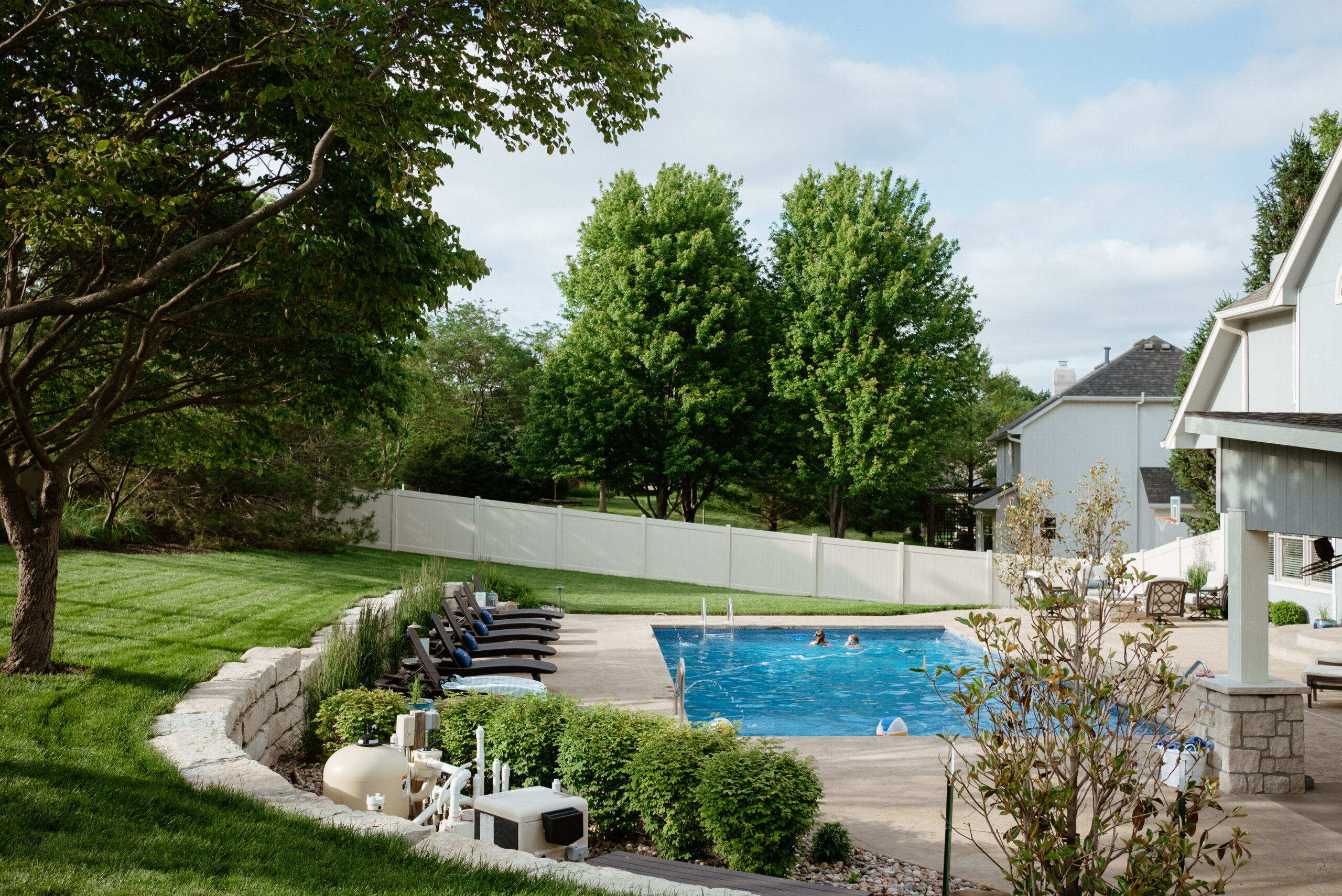
July in Kansas means cookouts, late evenings on the patio, kids running barefoot through the grass, and dogs who finally get to be outside as much as they want. It’s the best stretch of the year for living in your yard.
It’s also the worst stretch of the year for the pests that live in it.
Chiggers, fleas, ticks, and armyworms are all at peak activity right now. And while most homeowners don’t think about yard pests until someone comes inside covered in bites or the lawn starts disappearing overnight, by that point the problem is already well established.
Here’s what’s active in Kansas yards right now, what each pest actually does, and why a one-time spray from the hardware store isn’t going to cut it.
Chiggers: The Itch That Ruins Everything
If you’ve ever spent an evening outside in Kansas and woke up the next morning with clusters of intensely itchy red welts around your ankles, waistband, or anywhere clothing fits tightly against your skin, you’ve already met chiggers.
Chiggers are the larval stage of harvest mites. They don’t burrow into your skin or feed on blood. Instead, they attach to the surface and inject enzymes that dissolve skin cells, which they then feed on. Your body’s reaction to those enzymes is what creates the intense itching that can last for days or even weeks.
Where They Hide
Chiggers thrive in warm, moist environments. They live in tall grass, along fence lines, in garden beds, and in shaded areas with dense ground cover. Any time temperatures are above 80 degrees and there’s moisture in the soil, conditions are ideal for chigger activity. That describes most of June, July, and August across our service area.
Why They’re Hard to Avoid
Chiggers are nearly microscopic. You won’t see them on your skin, and you won’t feel the bite when it happens. The itching doesn’t start until hours after they’ve already fed and detached. By the time you know you’ve been bitten, it’s too late to do anything about that exposure. The only reliable approach is reducing the population in your yard before contact happens.
Ticks: A Genuine Health Risk
Ticks are more than an annoyance. They’re a legitimate health concern, and Kansas is one of the more active states in the country for tick-borne disease.
According to the Kansas Department of Health and Environment (KDHE), tick activity and density have been increasing in recent years, with over 200 laboratory reports of tick-borne diseases received in a single reporting period. The Lone Star tick, the most abundant species in Kansas, is an aggressive human biter found across at least the eastern two-thirds of the state.
Diseases Ticks Carry in Kansas
The list of tick-borne diseases confirmed in Kansas is longer than most homeowners realize:
- Ehrlichiosis
- Rocky Mountain Spotted Fever
- Tularemia
- Heartland virus
- Bourbon virus (which has been fatal in Kansas)
- Alpha-gal Syndrome, a tick-triggered condition that causes a lifelong allergic reaction to red meat
These aren’t theoretical risks. KDHE has investigated multiple cases with severe outcomes, including hospitalizations and at least one death from Bourbon virus.
Where They Live in Your Yard
Ticks are most commonly found along the edges of your lawn where grass meets landscaping, fence lines, or wooded areas. Research consistently shows that roughly 80% of ticks are found within three yards of these boundary areas. They climb to the tips of tall grass blades and transfer onto passing hosts, whether that’s a person, a child, or a pet.
Regular mowing helps, but it doesn’t eliminate the population. A professional yard treatment targeting ticks where they actually live is the most effective layer of protection for your family.
Fleas: Not Just a Pet Problem
Most homeowners associate fleas with pets, and they’re not wrong. But fleas don’t need a pet to establish themselves in your yard. They thrive in warm, shaded, humid conditions and can build large populations in the landscape around your home, especially in mulch beds, under shrubs, and in areas where the lawn stays consistently moist.
Why Fleas Peak in Summer
Flea populations typically peak in July and August when heat and humidity are at their highest. A single female flea can produce up to 50 eggs per day, and those eggs hatch in as little as two days in warm conditions. Without treatment, a small flea presence in June can become a full-blown infestation by August.
Fleas bite humans and pets alike, and they can carry tapeworms and cause allergic dermatitis in dogs and cats. If your pets are scratching more than usual or you’re noticing small bites around your ankles after being in the yard, fleas may already be established on your property.
Armyworms: The Overnight Lawn Destroyer
Armyworms are a completely different kind of threat. They don’t bite people or pets. They eat your lawn.
We covered armyworms in detail in our earlier post on summer lawn threats, but the short version is this: armyworms are caterpillars that migrate into Kansas from the southern U.S. each summer. They travel in large groups, feed aggressively on grass blades (especially tall fescue), and can strip a healthy lawn in 48 to 72 hours during a heavy infestation.
Why They’re Unpredictable
Armyworms don’t overwinter in Kansas. They arrive on storm systems, which means outbreaks are hard to predict from year to year. When they show up, they show up fast, and waiting to see if they’ll be a problem is usually what leads to the worst damage.
What to Watch For
Look for sudden, widespread browning that doesn’t follow the pattern of drought or fungus. The caterpillars themselves are green, brown, or gray with yellow stripes and can reach up to two inches long. They feed most actively in the mornings, evenings, and on cloudy days.
The good news: armyworms respond well to insecticide treatment when caught early. And our CFT program covers them.
Why a One-Time Spray Doesn’t Work
A single application from a can or a bag at the hardware store will knock down whatever pests it contacts on that day. But it won’t last. The residual life of most over-the-counter products is short, and in the heat and humidity of a Kansas summer, the active ingredients break down quickly.
Chiggers, fleas, and ticks don’t take a break after one treatment. New populations hatch, migrate in from neighboring properties, and re-establish within weeks. Armyworms can arrive at any point during the summer on the next storm front.
That’s why effective pest control in your yard requires a recurring treatment schedule through the entire active season, not a single spray and a hope for the best.
How the Schendel CFT Program Works
Our CFT (Chigger, Flea, Tick & Armyworm) program is built around the way these pests actually behave in Kansas. Treatments run from May through September on a recurring schedule, reapplied every four to six weeks to maintain consistent protection through the full active season.
Each application targets the areas of your property where pests live and breed: along lawn edges, around landscape beds, in shaded areas, and along fence lines and property boundaries. The treatment also covers armyworms, so customers on the CFT schedule already have a layer of protection against lawn damage from summer infestations.
For homeowners already on the Thrive Lawn Care program, adding CFT means your lawn is getting both the nutritional support and the pest protection it needs to stay healthy through the hardest months of the year.
What Our Customers Get
- Recurring treatments from May through September
- Coverage for chiggers, fleas, ticks, and armyworms
- Targeted application to high-risk zones on your property
- Peace of mind that your yard is safe for your family and pets all summer
Your Yard Should Be Yours to Enjoy
You shouldn’t have to think twice about letting the kids play outside, hosting a cookout, or sitting on the patio after dinner. Your yard is supposed to be the best part of your home in the summer, not a place you avoid because of what’s hiding in the grass.
If you’re dealing with bites, noticing pest activity, or just want to make sure your yard is protected for the rest of the season, now is the time to get on the CFT schedule. July is peak season, and the earlier you start, the faster your yard becomes a place you can actually use again.
We serve properties across Topeka, Lawrence, and surrounding communities.
Ready to get your yard back? Get a free estimate or give us a call.
Topeka: (785) 286-0015
Lawrence: (785) 330-5326
