
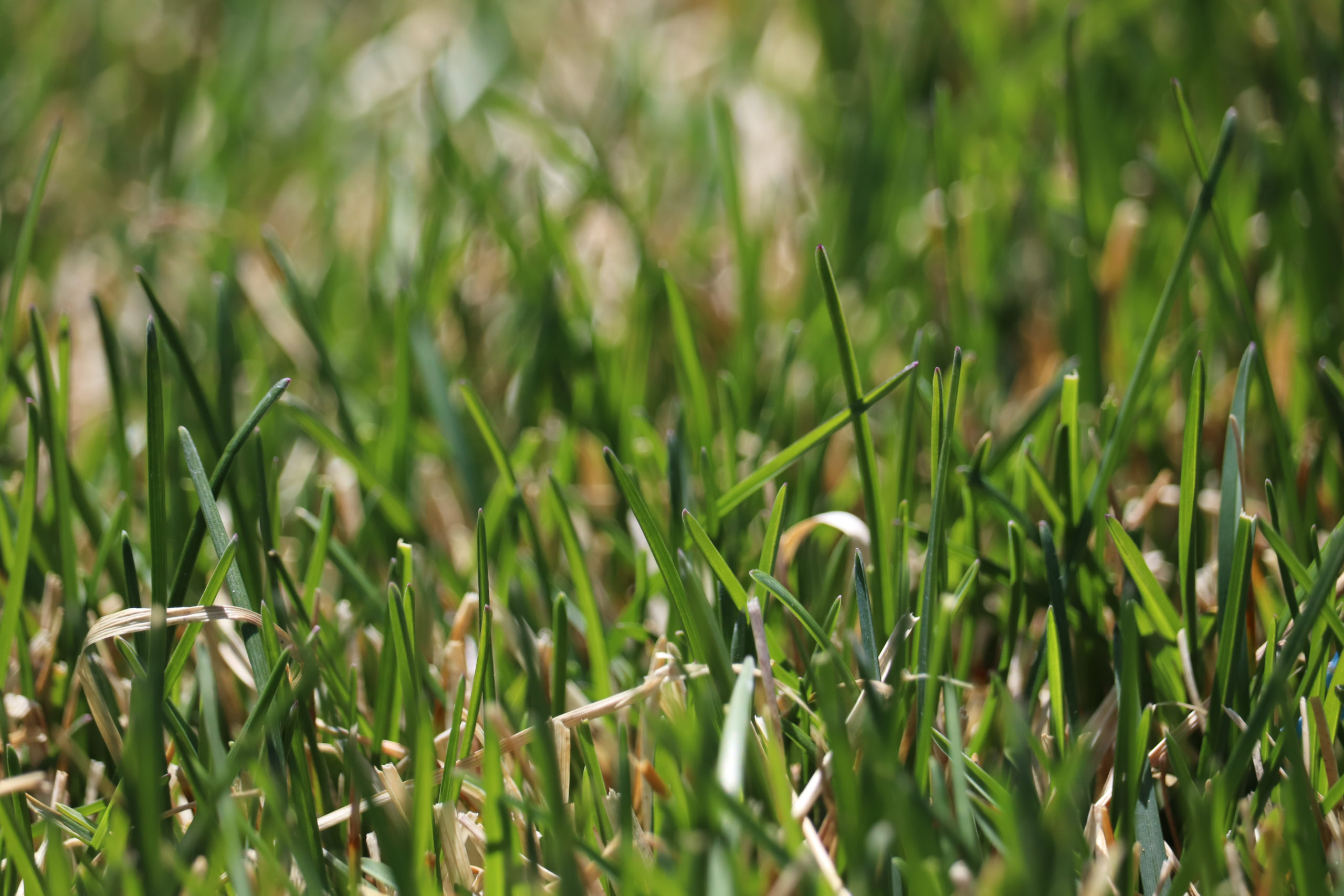
Every year around this time, we get the same question from homeowners across Topeka: “Will those bare spots fill in on their own?”
For tall fescue lawns, which is what most of Topeka is growing, the answer is no. Not this fall, not next spring, not ever.
That’s not a sales pitch. It’s how the grass works. And once you understand why, the case for fall seeding stops being a recommendation and starts being the only real option for a lawn that took damage this summer.
Why Your Lawn Can’t Repair Itself
Tall fescue is what’s called a bunch-type grass. It grows in clumps from a central crown and it does not produce runners, stolons, or rhizomes. Warm-season grasses like bermudagrass spread sideways and creep into bare areas on their own. Fescue cannot do that.
When a fescue plant dies from brown patch, heat stress, drought, or foot traffic, the space it occupied stays empty. The surrounding plants get slightly wider over time, but they will never close a bare patch on their own.
That empty space does get filled eventually. Just not by grass. Weed seeds germinate in open soil far more readily than they do in dense turf, which is why a lawn that thins one summer usually has a weed problem the following spring.
If your Topeka lawn has thin areas after this summer, the only way those spots come back as grass is if you put seed there.
Why Fall Beats Spring for Seeding in Kansas
Homeowners often assume spring is the natural time to plant grass. It feels right. Everything else is growing.
For cool-season lawns in northeast Kansas, spring is actually the worst realistic option.
Fall Gives Seedlings a Full Head Start
According to Kansas State University Research and Extension, the ideal window for seeding bluegrass and tall fescue in our region is early to mid-September. At that point, soil temperatures are still warm enough for fast germination, nighttime air temperatures are dropping, and rainfall becomes more reliable. Seed germinates in four to seven days under those conditions.
New grass planted in September gets roughly nine months of favorable growing weather before it faces its first real summer. It builds a deep root system through fall, goes dormant over winter, and comes back in spring already established.
Spring Seeding Runs Out of Time
Grass seeded in April or May gets six to eight weeks of good growing conditions before Kansas heat arrives. Those seedlings hit July with shallow roots and no reserves. Most of them do not survive their first summer, which means a lot of homeowners end up paying to seed twice.
Spring Seeding Blocks Your Crabgrass Prevention
This is the part most homeowners never hear until it’s too late. Pre-emergent herbicide works by preventing seeds from germinating, and it cannot tell the difference between crabgrass seed and grass seed. If you seed in spring, you may have to skip your crabgrass pre-emergent application that year.
So spring seeding means choosing between new grass and crabgrass control. Fall seeding means you get both.
Weed Pressure Drops Off
Summer annual weeds are finishing their life cycle by September. New grass seedlings in fall face far less competition for light, water, and nutrients than they would in spring, when crabgrass and broadleaf weeds are at their most aggressive.
The Seeding Window in Topeka
Timing inside the fall season matters more than most people expect.
Late August is when we start. Our crews begin seeding in late August, and there’s a real advantage to being early on the calendar. Soil is still warm, which means fast germination, and those lawns get the longest possible runway to establish before winter. Early scheduling also means you pick your date instead of taking what’s left.
Early to mid September is peak season. This is when soil temperature and moisture line up ideally for germination and establishment. It’s also when demand is heaviest, so these dates book out first.
Through the first week of October still works well. Results are strong, though establishment takes a little longer as days shorten and temperatures drop.
October 15 is the deadline for northeast Kansas. K-State identifies this as the cutoff for our region. Seed planted after that point often doesn’t establish enough root structure to survive winter, and underdeveloped seedlings going into a hard freeze tend to die from cold or desiccation.
That gives us roughly a seven-week window from late August through mid-October. Once it closes, the next opportunity is a full year away, which is exactly why scheduling now matters. The best dates go first.
Two Seeding Options and How to Choose
We offer fall seeding two ways, and the right answer depends on what your lawn actually needs.
Seeding With Aeration
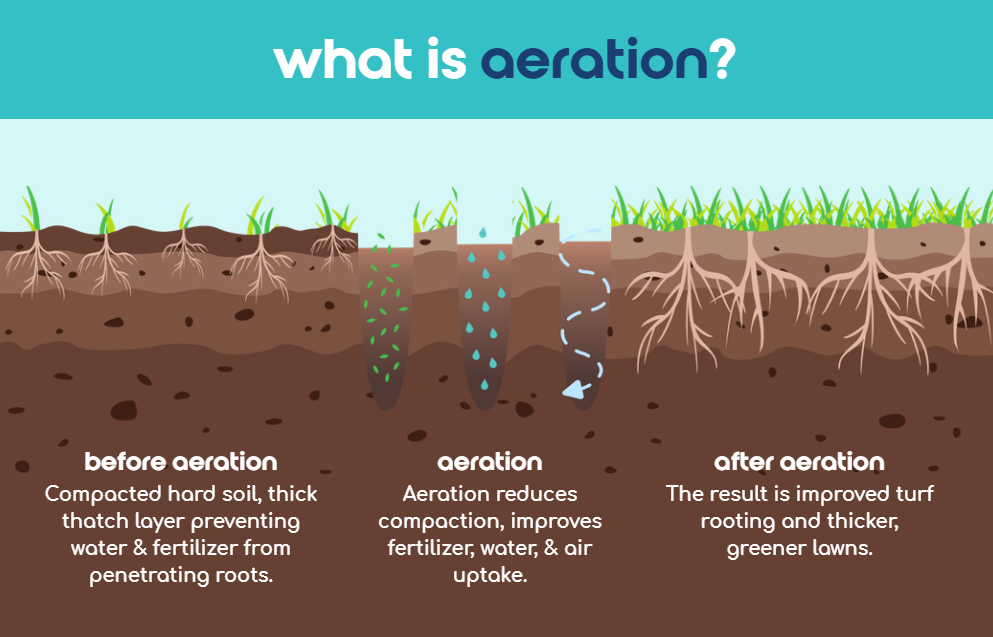
Core aeration pulls plugs of soil from the lawn, relieving compaction and opening direct channels down into the root zone. Seed drops into those openings and gets true seed-to-soil contact rather than sitting on the surface where it can wash away or dry out.
Beyond seeding, aeration improves water, air, and fertilizer movement into the soil and helps break down thatch buildup.
This is the stronger choice for lawns with compacted soil, heavy foot traffic, a thatch layer, or thinning across large areas. If your lawn took significant damage this summer or has not been aerated in several years, this is the option we typically recommend.
Seeding Without Aeration
Straight overseeding works well when the lawn is fundamentally healthy and the goal is filling specific damaged areas. If your soil is in reasonable condition and you’re targeting patches from brown patch, heat stress, or wear spots, this puts seed exactly where it needs to go.
Both options use quality fescue blends selected for Kansas conditions. Cheap seed mixes containing annual ryegrass, fine fescue, or annual bluegrass green up fast and then fail in the first hot summer, which is exactly the situation you’re trying to fix.
Why This Fall Matters More Than Usual
This summer was rough on Topeka lawns.
Heavy spring rain followed by heat and humidity created near-ideal conditions for brown patch fungus, and we saw it across properties throughout our service area. Brown patch is primarily a leaf disease and turf often recovers within a few weeks once temperatures cool. But in severe outbreaks, the fungus moves into the crown of the plant and kills it outright.
Crown damage does not recover. If you have areas that stayed brown for weeks and never greened back up, those plants are gone. We covered how to identify this in our post on brown patch and lawn fungus in Kansas.
Add drought stress and normal summer wear on top of the disease pressure, and a lot of lawns are heading into fall thinner than they were in May. Seeding is what reverses that before the thin spots turn into a weed problem next spring.
What Happens After Seeding
New seed needs consistent moisture to germinate and establish. That means light, frequent watering for the first two to three weeks, which is the opposite of the deep and infrequent approach we recommend for established lawns.
If watering by hand or moving sprinklers around sounds like a hassle, a properly functioning irrigation system makes this stage significantly easier and improves germination rates.
Mowing continues at normal height. New seedlings should not be allowed to grow too tall before their first cut, since that weakens crown development. Fallen leaves need to be cleared so they do not smother emerging grass.
Pairing seeding with an ongoing lawn care program gives new turf the nutrition it needs to establish quickly and hold through winter. Fall is also the most effective time of year for broadleaf weed control, so the timing works in your favor across the board.
Get on the Schedule Before the Window Closes
The seeding window in Topeka is roughly six weeks, and schedules fill on a first-come basis. Every year we have homeowners call in early October hoping to get in, and by then the calendar is booked.
If your lawn has thin spots, bare patches, or areas that never recovered this summer, now is the time to get scheduled. Not September. Now.
We serve properties across Topeka, Lawrence, and surrounding communities.
Ready to book your fall seeding? Get a free estimate or give us a call.
Topeka: (785) 286-0015
Lawrence: (785) 330-5326
